
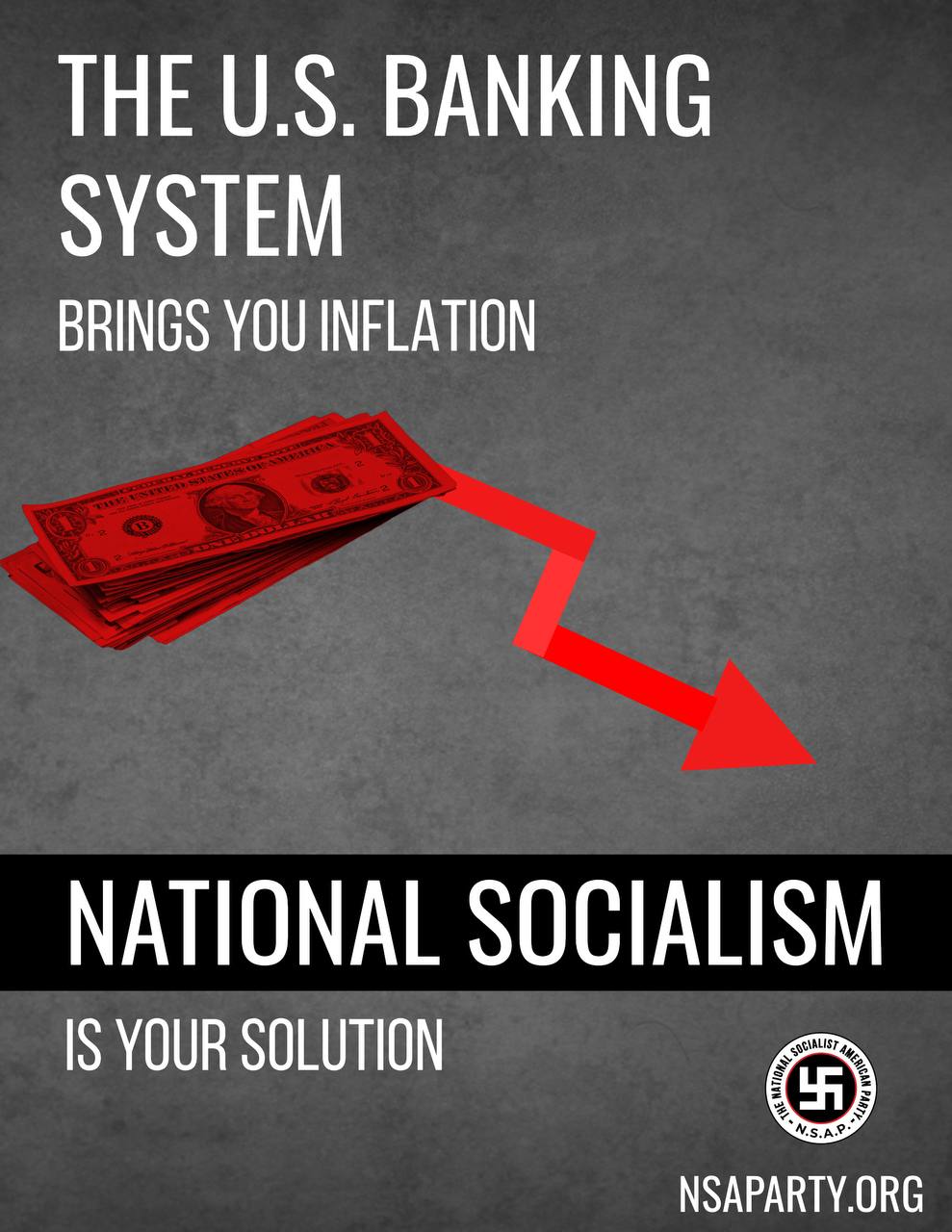
How America’s Money-Masters Prepare 2026—and How the People Must Respond
For years, the Federal Reserve has experimented with the American economy as if it were a laboratory animal—injecting liquidity, draining it, pushing artificial growth, and then strangling it with the same indifference a surgeon shows a cadaver. What they unveil on December 1st, 2025 marks their latest pivot: the official end of quantitative tightening. In everyday terms, the regime is preparing to print again, inflate markets again, and shift the burden onto the working population again.
The pattern is familiar. The consequences are predictable. And the winners have already been chosen.
The Return of the Printing Press
The Fed’s announcement signals a major shift. Quantitative tightening—America’s attempt to reverse the pandemic-era excess—will stop. Money will begin flowing freely again. Financial markets will celebrate, mortgages may temporarily dip, and the illusion of prosperity will be offered to the public as “economic recovery.”
Yet as always, this revival comes at a cost paid by someone else.
When the Fed prints, stock prices rise, assets inflate, and investor wealth surges. But savings accounts rot. Buying power shrinks. The worker is left chasing prices that move faster than wages. This is not an accident; it is the system functioning exactly as designed.
2020: The Blueprint for Manufactured Booms
The last time America flipped the QE switch was March 2020. The government mailed out stimulus checks, financed never-ending unemployment, and threw trillions into PPP loans. On the surface, these actions were sold as “relief.”
But beneath that marketing was the real operation:
- The stock market exploded.
- Asset holders became richer than ever.
- The cost of living surged.
- Wages never caught up.
Inflation is the hidden tax that punishes savers, workers, and families—while rewarding investors, corporate owners, and institutions.
This is why average Americans today feel poorer despite “record job numbers.” The purchasing power of the dollar has been hollowed out from the inside.
2022–2025: Tightening the Noose
When inflation became politically embarrassing, the Fed reversed course. Interest rates were pushed up. Quantitative tightening began. Assets on the Fed’s balance sheet were sold off to drain money out of the system.
QT was simple:
Less money in the system → cheaper dollar → higher borrowing costs → slower growth.
The public took the hit—layoffs, higher mortgage rates, shrinking home affordability. And now, because this tightening has gone too far, the Fed is prepared to reverse everything once more.
The experiment continues.
Why the Federal Reserve is Ending QT
The Fed is not making this decision for the average family. Their motives reveal structural weakness in America’s economy.
1. Banks Are Running Dry
Reserves have fallen to levels not seen since 2020. Banks cannot issue enough loans. They cannot process withdrawals comfortably. Liquidity is tight, and a credit freeze looms.
To prevent a crisis, the Fed must pump money back into the system—prioritizing the banks over the public.
2. The Job Market is Contracting
Layoffs across the country are rising—not because of economic collapse, but because of efficiency. Artificial intelligence is replacing white-collar tasks faster than corporations can reorganize their staffing charts.
The Fed’s answer?
Create more liquidity to stimulate business investment, hoping that cheaper money will encourage employers to hire again. But history shows that cheap money rarely builds stable jobs—it builds bubbles.
3. Mortgage Rates Need Political Relief
Mortgage rates have become a death sentence for young families. Homeownership—a core pillar of national stability—has been pushed out of reach for millions.
The Fed knows that Treasury yields control mortgage rates.
Ending QT, or shifting back toward buying treasuries, will:
- Increase demand for government bonds
- Lower yields
- Lower mortgage rates
Home affordability may improve briefly, but only through the same mechanism that destroys the value of savings and wages: inflation.
History’s Lesson: Inflation Crowns Investors
Every cycle ends the same way.
When the Fed prints:
- Asset owners get wealthier.
- Wages stagnate.
- Savings lose value.
- The middle class shrinks.
- Wealth concentrates further into the hands of a tiny elite.
In America’s financial architecture, the only people who consistently benefit from monetary expansion are investors, not workers.
This is why the wealthy celebrate QE while the public suffers its aftershock.
The NSAP Position: The People Must Not Be Treated Like Cattle
The Federal Reserve’s policies reveal a truth that our movement has stated for years: America’s financial system is engineered to protect capital and sacrifice the People.
A nation cannot survive when its working class is treated as fodder for inflationary cycles.
The NSAP rejects an economy where bankers dictate the fate of families, where the value of a man’s labor is diluted by printing presses, and where homeownership is contingent on central-bank whims.
With the NSAP was in political power:
-Every American would be entitled to affordable housing.
-The labor of the worker would be the single most valuable thing in our economy.
-Inflation would be a thing of the past.
Surviving Capitalist America
If the system is rigged to reward investors, then the People must become owners, not perpetual renters of their own future. This does not mean embracing the greed of Wall Street—but claiming the tools that protect a family from inflation:
- Assets
- Tangible goods
- Land
- Hard money
- Equities
- Productive investments
A People with ownership cannot be economically enslaved.
America marches toward 2026 on a foundation of unstable money and political desperation. The Fed will print to avoid a banking crisis, stimulate a weak labor market, and ease the misery of mortgage rates. But nothing they do will strengthen the People. Their actions preserve the system—not the Nation.
It is the responsibility of our movement to prepare, educate, and build a community capable of surviving the next wave of monetary distortion.
Because those who do not understand the game are always the ones paying for it.

Leave a Reply